
How to Cook a Turkey From Frozen (Easy Oven Method)
Thanksgiving is coming, the sides are planned, and then you open the freezer and realize your turkey is still frozen solid. Don’t panic! You can cook a turkey from frozen in the oven, and you don’t have to scrap your dinner plans.
The secret is knowing how to cook it safely, when to remove the giblets, and how much extra time to allow. You won’t be able to season the turkey right away, but once the outside has thawed in the oven, you can add butter, herbs, and your favorite seasonings.
To cook a frozen turkey, roast it unstuffed in an oven set to 325°F. Plan on at least 50% more cooking time than you would for a fully thawed turkey, and use a meat thermometer to make sure it reaches 165°F in the required areas.
If you’re planning ahead for the holiday, my guide on how to thaw a turkey explains the easiest thawing methods and how long each one takes. But if you’re already short on time, here’s what you need to know.
Can You Cook a Turkey From Frozen?
Yes! You can safely roast a whole turkey straight from the freezer, as long as you use the oven and follow safe cooking practices.
There are a few things to keep in mind:
- It takes longer. A completely frozen turkey needs at least 50% more cooking time than a fully thawed bird of the same size.
- You can’t season it right away. The skin is frozen, so you’ll need to wait until it begins to thaw before adding butter, oil, and seasonings.
- You’ll need to remove the giblets during cooking. Wait until the cavity has thawed enough to remove them safely with tongs.
- A meat thermometer is essential. Cooking times are estimates, and the turkey must reach 165°F in the thickest part of the breast and the innermost parts of the thigh and wing.
One important thing: this method is for oven roasting an unstuffed turkey. Don’t try to deep-fry, grill, smoke, or slow-cook a whole turkey from frozen.
What You’ll Need
You don’t need anything fancy to cook a turkey from frozen. Just gather a few basics.
- A frozen, unstuffed turkey: Keep it frozen until you’re ready to start cooking.
- A roasting pan: Choose a pan large enough to hold the turkey without crowding your oven.
- A roasting rack: This helps air circulate around the bird.
- Kitchen tongs: You’ll need these to remove the neck and giblet package once the cavity has thawed.
- Butter or oil: Use this to help the seasonings stick and encourage the skin to brown.
- Seasonings: Salt, black pepper, garlic, rosemary, thyme, or your favorite poultry seasoning all work well.
- A food thermometer: This is the most important tool for making sure your turkey is safely cooked.
How to Cook a Turkey From Frozen in the Oven
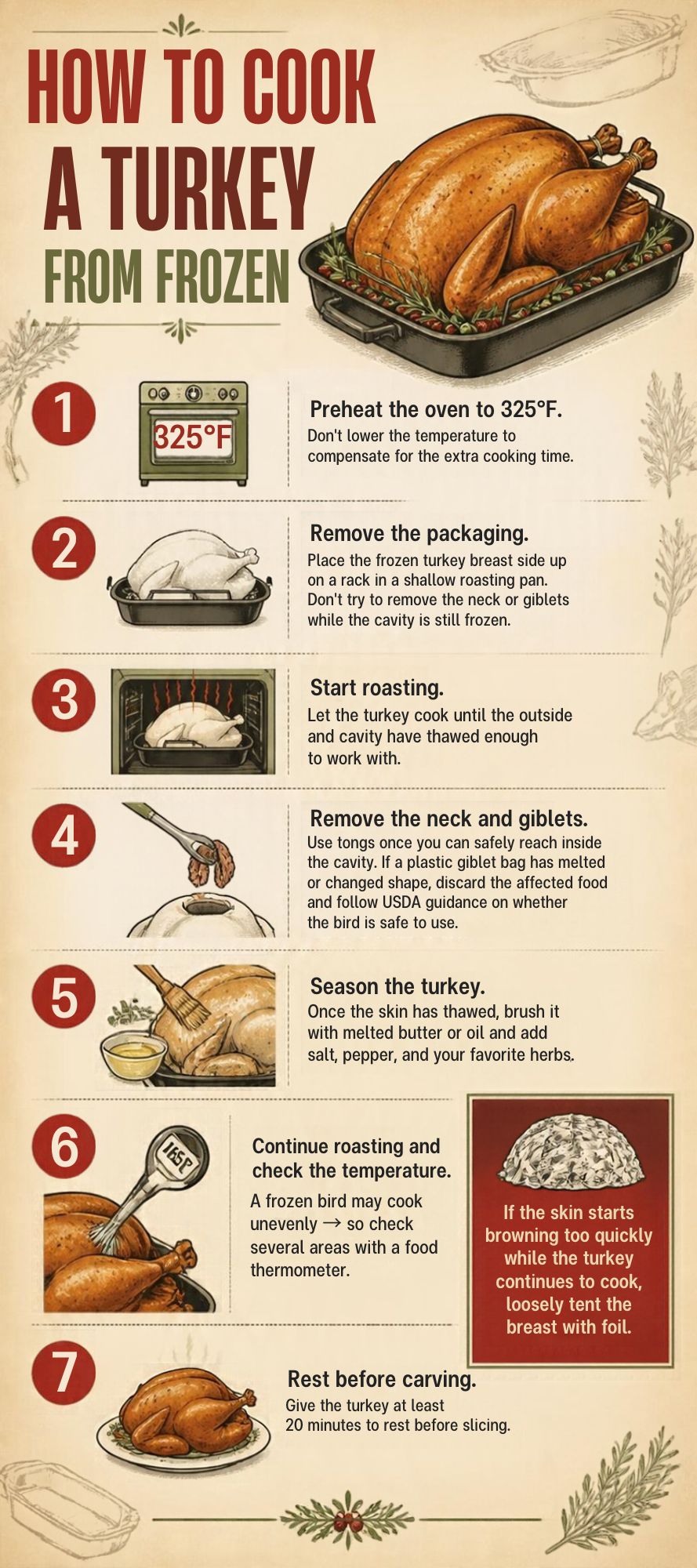
Cooking a frozen turkey is a little different from roasting a thawed one, but the process is straightforward. You’ll start by roasting the bird while it’s still frozen, remove the giblets when possible, and then season it once the skin has thawed.
Step 1: Preheat the oven to 325°F
Set your oven to 325°F and prepare a shallow roasting pan with a rack.
Don’t turn up the oven temperature to speed things along. A steady oven temperature helps the turkey cook properly, and you’ll have enough extra time built into the process.
Step 2: Remove the packaging and place the turkey in the pan
Remove all outside packaging before putting the turkey in the oven. If the turkey is frozen solid, don’t force the legs apart or try to remove the neck and giblets yet.
Place the turkey breast side up on the roasting rack in your pan.
Important: Don’t cook a frozen turkey in an oven cooking bag. You need to be able to access the cavity during cooking to remove the giblets, and opening a hot cooking bag can cause serious burns.
Step 3: Start roasting the frozen turkey
Put the turkey in the preheated oven and let it roast.
At this stage, the goal is to let the outside and cavity begin to thaw while the turkey cooks. You won’t be able to season it properly yet, so don’t worry about the butter and herbs just yet.
Avoid repeatedly opening the oven door. Keeping the oven temperature steady helps the turkey cook more consistently.
Step 4: Remove the neck and giblets
As the turkey cooks, the cavity will thaw enough for you to remove the neck and giblet package.
Use clean kitchen tongs or a fork to carefully pull them out. Don’t reach into a hot cavity with your bare hands.
Check both the main body cavity and the smaller cavity near the neck, since the package may be tucked into either location.
If the giblets are in a paper package, there is generally no safety concern if they cook inside the bird, provided they’re thoroughly cooked. If they’re in a plastic bag and the bag has melted, changed shape, or otherwise been altered by the heat, don’t use the giblets or the turkey. USDA guidance warns that harmful chemicals may have migrated into the surrounding meat.
Step 5: Add butter and seasonings
Once the skin has thawed enough to work with, carefully brush the turkey with melted butter or oil.
Season with salt, pepper, garlic, rosemary, thyme, or whatever flavors you love. You can also add a little poultry seasoning for a classic Thanksgiving flavor.
If you’re using an herb butter, gently spread it over the accessible skin. Don’t worry if you can’t get the seasoning under the skin as easily as you would with a thawed turkey.
You can still get a delicious, flavorful bird even if you have to skip some of the usual prep steps.
Step 6: Continue roasting until the turkey reaches 165°F
Return the turkey to the oven and continue roasting until it’s fully cooked.
A frozen turkey may cook unevenly, so don’t rely on appearance or the clock alone. Use a food thermometer to check the temperature in several places:
- Thickest part of the breast
- Innermost part of the thigh
- Innermost part of the wing
Each area needs to reach at least 165°F. Avoid touching bone with the thermometer probe, as that can affect the reading.
If one area isn’t ready, return the turkey to the oven and continue cooking until all the required areas reach the safe temperature.
Step 7: Let the turkey rest before carving
Once the turkey reaches 165°F in all the required areas, remove it from the oven and let it rest for at least 20 minutes before carving.
Resting gives the juices time to settle and makes the turkey easier to carve.
Then slice, serve, and enjoy your Thanksgiving dinner. Nobody needs to know your turkey started out frozen!
How Long Does It Take to Cook a Frozen Turkey?
A frozen turkey takes at least 50% longer to cook than a fully thawed turkey of the same weight. The exact time depends on the size of the bird and your oven, so use the estimates as a starting point rather than a promise.
The table below uses USDA roasting estimates for an unstuffed, thawed turkey at 325°F, with at least 50% additional time added for a fully frozen turkey.
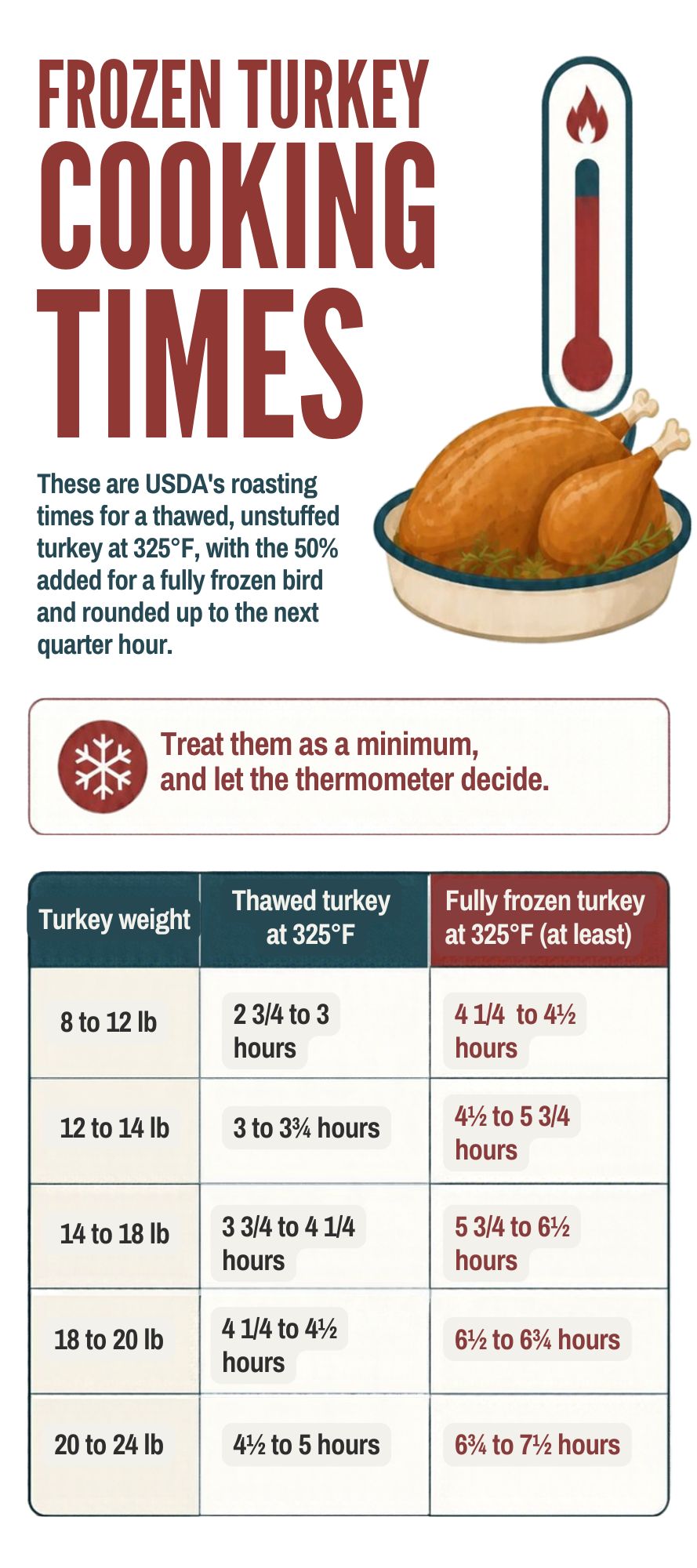
These times are estimates, and your turkey may take longer. A partially frozen bird may cook in less time than a completely frozen one, but the internal temperature is what determines when it’s done.
My advice: Build in extra time, especially if you’re serving a big group. It’s much easier to keep a cooked turkey warm briefly while you finish the sides than to have everyone waiting for the turkey to reach temperature.
Tips for Getting the Best Results
Cooking a frozen turkey isn’t the same as cooking one you’ve carefully thawed and prepped the day before, but a few simple tips will help.
- Cook it unstuffed. For the safest, most predictable results, prepare your stuffing separately in a casserole dish.
- Use a roasting rack. This allows heat to circulate around the turkey.
- Wait to season it. Butter and seasonings are easier to apply once the skin has thawed. Check out the seasoned butter in my How to Cook a Perfect Turkey post for a wonderful recipe for seasoning it.
- Remove the giblets as soon as you can reach them safely. Don’t try to force a frozen package out of the cavity.
- Check more than one temperature. The breast, thigh, and wing all need to reach 165°F.
- Don’t skip the resting time. Give the turkey at least 20 minutes before carving.
- Keep an eye on the skin. If it becomes deeply browned before the turkey is cooked through, loosely tent the breast with foil.
If you have time to thaw your turkey before cooking, you’ll have more flexibility with brining, seasoning, and prep. My turkey thawing guide walks you through the refrigerator and cold-water methods.
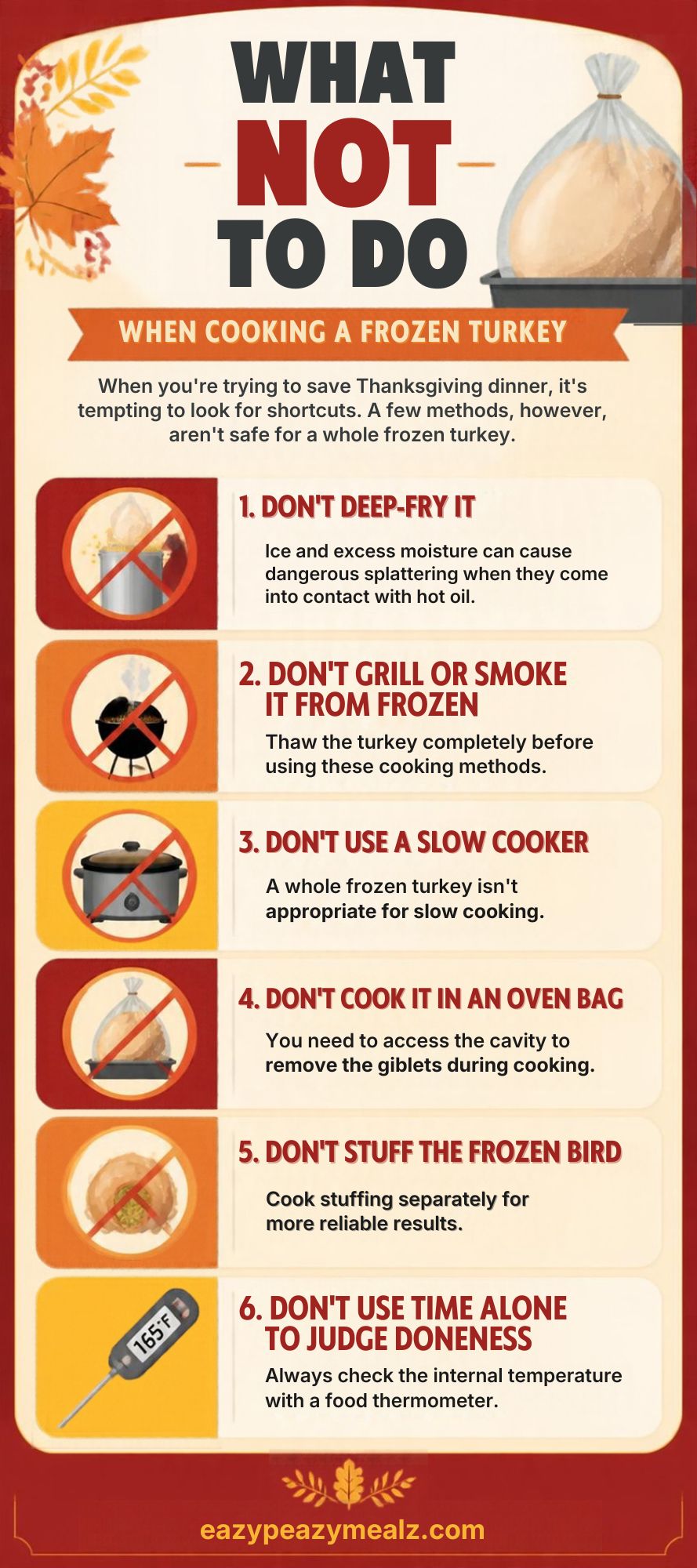
What Not to Do When Cooking a Frozen Turkey
When you’re trying to save Thanksgiving dinner, it’s tempting to look for shortcuts. A few methods, however, aren’t safe for a whole frozen turkey.
- Don’t deep-fry it. Ice and excess moisture can cause dangerous splattering when they come into contact with hot oil.
- Don’t grill or smoke it from frozen. Thaw the turkey completely before using these cooking methods.
- Don’t use a slow cooker. A whole frozen turkey isn’t appropriate for slow cooking.
- Don’t cook it in an oven bag. You need to access the cavity to remove the giblets during cooking.
- Don’t stuff the frozen bird. Cook stuffing separately for more reliable results.
- Don’t use time alone to judge doneness. Always check the internal temperature with a food thermometer.
Frequently Asked Questions
Is it safe to cook a turkey straight from the freezer?
Yes. USDA guidance confirms that an unstuffed turkey can be roasted from frozen in the oven. Use an oven temperature of at least 325°F, allow at least 50% more cooking time, and check the internal temperature in the breast, thigh, and wing.
Do I need to thaw a turkey before cooking it?
No, not if you’re roasting it in the oven. Cooking from frozen is safe, although it takes longer and makes seasoning and removing the giblets more challenging at the beginning.
If you have enough time, thawing the turkey first gives you more flexibility. See my guide on how to thaw a turkey for the safest methods and timing.
Can I season a frozen turkey?
Not effectively at first. The frozen skin makes it difficult for butter, oil, and seasonings to stick. Start roasting the turkey and season it once the outside has thawed enough to work with.
What if the giblets are stuck inside the frozen turkey?
Don’t force them out. Begin roasting the turkey and wait until the cavity has thawed enough to remove the package carefully with tongs or a fork.
Can I cook a frozen turkey at 350°F instead of 325°F?
Yes. USDA’s rule is an oven no lower than 325°F, so 350°F is safe. It will cook a little faster than the times in the chart, so start checking the temperature earlier.
How do I know when a frozen turkey is done?
Use a food thermometer. The thickest part of the breast and the innermost parts of the thigh and wing must each reach at least 165°F. Check several spots because a frozen turkey may cook unevenly.
Can I stuff a turkey that is still frozen?
No. For safety and more predictable cooking, roast the turkey unstuffed and bake your stuffing separately. This lets the stuffing cook evenly without relying on the turkey’s cavity to reach a safe temperature.
Don’t Let a Frozen Turkey Ruin Your Thanksgiving
Ideally, you’ll remember to move your turkey to the refrigerator several days before Thanksgiving. But if life gets busy and that doesn’t happen, you still have a safe option.
Roast the turkey unstuffed at 325°F, remove the giblets when the cavity has thawed enough, season it as soon as you can, and allow plenty of extra cooking time. Most importantly, use a thermometer to make sure it reaches 165°F in all the required areas.
And next year? Add your turkey’s thawing day to the calendar along with your shopping list. One small reminder can make Thanksgiving a whole lot easier!
How to Cook a Frozen Turkey
Ingredients
- 1 whole frozen turkey unstuffed
- 2 –4 tablespoons butter or olive oil
- Salt and black pepper to taste
- 1 –2 teaspoons garlic powder optional
- 1 –2 teaspoons dried herbs such as thyme, rosemary, or poultry seasoning (optional)
Instructions
- Preheat the oven. Heat the oven to 325°F. Do not lower the temperature to compensate for the extra cooking time.
- Prepare the turkey. Remove the outer packaging. Place the frozen turkey breast-side up on a rack inside a shallow roasting pan. Do not try to remove the neck or giblets while the cavity is still frozen.
- Begin roasting. Place the turkey in the preheated oven and roast until the outside has thawed enough to loosen the neck and giblets.
- Remove the giblets. Carefully use tongs to remove the neck and giblets once they are accessible. If the giblets are in a plastic bag that has melted or changed shape, do not use the giblets or the turkey; follow USDA food-safety guidance.
- Season the turkey. Once the skin has thawed enough, carefully brush the turkey with melted butter or olive oil. Season with salt, pepper, and any optional herbs or spices.
- Continue roasting. Return the turkey to the oven and continue cooking until it reaches an internal temperature of 165°F. Check the thickest part of the breast and the innermost thigh and wing, avoiding the bone.
- Rest and carve. Remove the turkey from the oven and let it rest for at least 20 minutes before carving.
Notes
Our recipe card software calculates these nutrition facts based on averages for the above ingredients, different brands, and quality of produce/meats may have different nutritional information, always calculate your own based on the specific products you use in order to achieve accurate macros for this recipe.
 Want to use this recipe in a meal plan?Try PrePear, my FREE Meal Planning App that allows you to save your recipes, plan meals, shop for groceries, and cook simply in one place. Join Here!


Leave a Reply